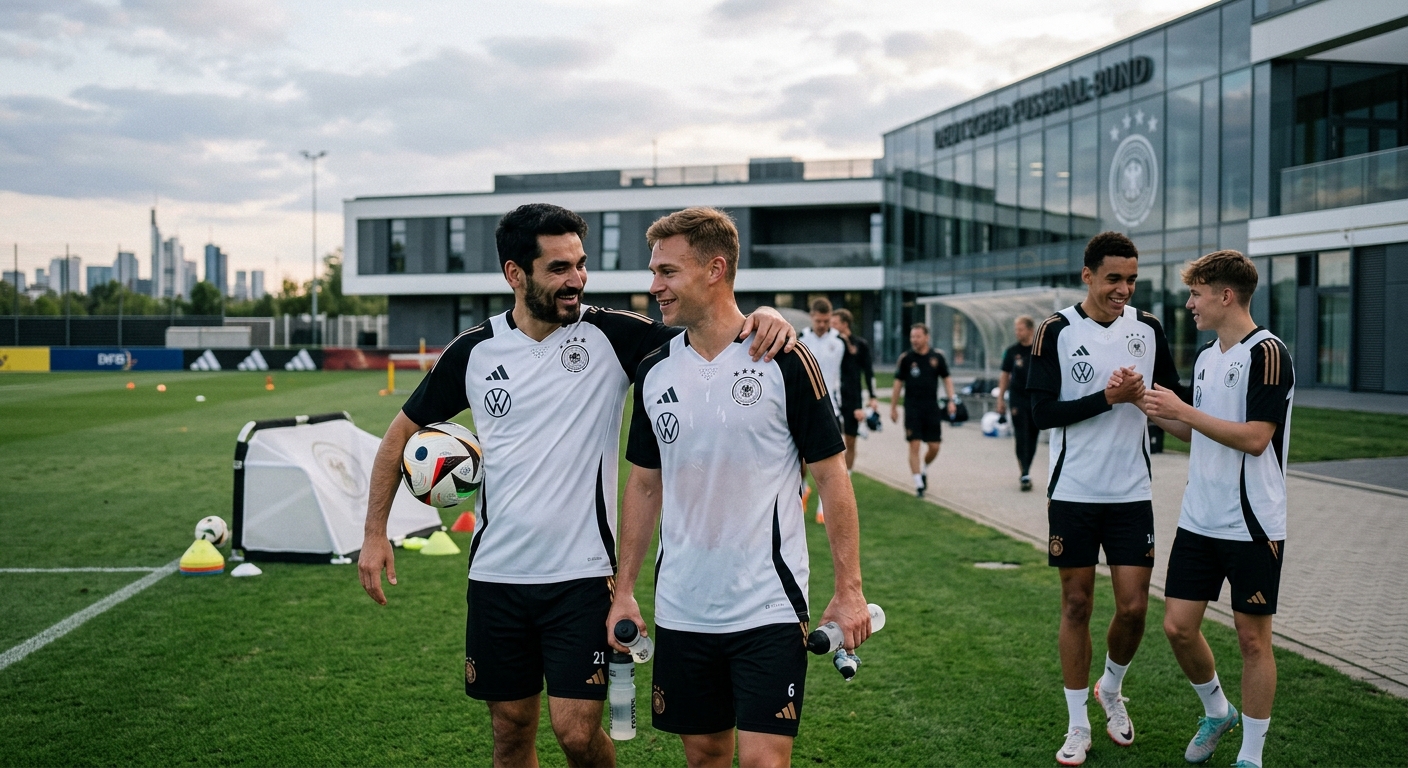
Germany National Football Team: Players, History, and Achievements
The Germany national football team has one of the best CVs in world football. Four men’s World Cups, three European Championships, two World Cup titles, and eight European triumphs in women’s football. This guide gives everything you need to know about the players representing Germany on the pitch, who they are coached by, and who won which trophies. All DFB squad and fixtures information was last updated in October 2026 – it could change – so please check the official DFB website for call-ups before putting too much stock in any one name.
Where the Germany soccer team stands right now
The short answer is that there is different coaching staff for the men and women’s teams. The Women’s Team is in a good position. The men have qualified for the 2026 World Cup in the United States, Canada, and Mexico, but failed to finish above the Round of 32 after a 1-1 draw against Paraguay and a penalty shootout loss (4-3) in the opening match.
It was the third consecutive World Cup for Germany where they failed to make it far. Julian Nagelsmann left his post four days after the loss, and the DFB wasted no time in finding a replacement. Al Jazeera
Who coaches Germany?
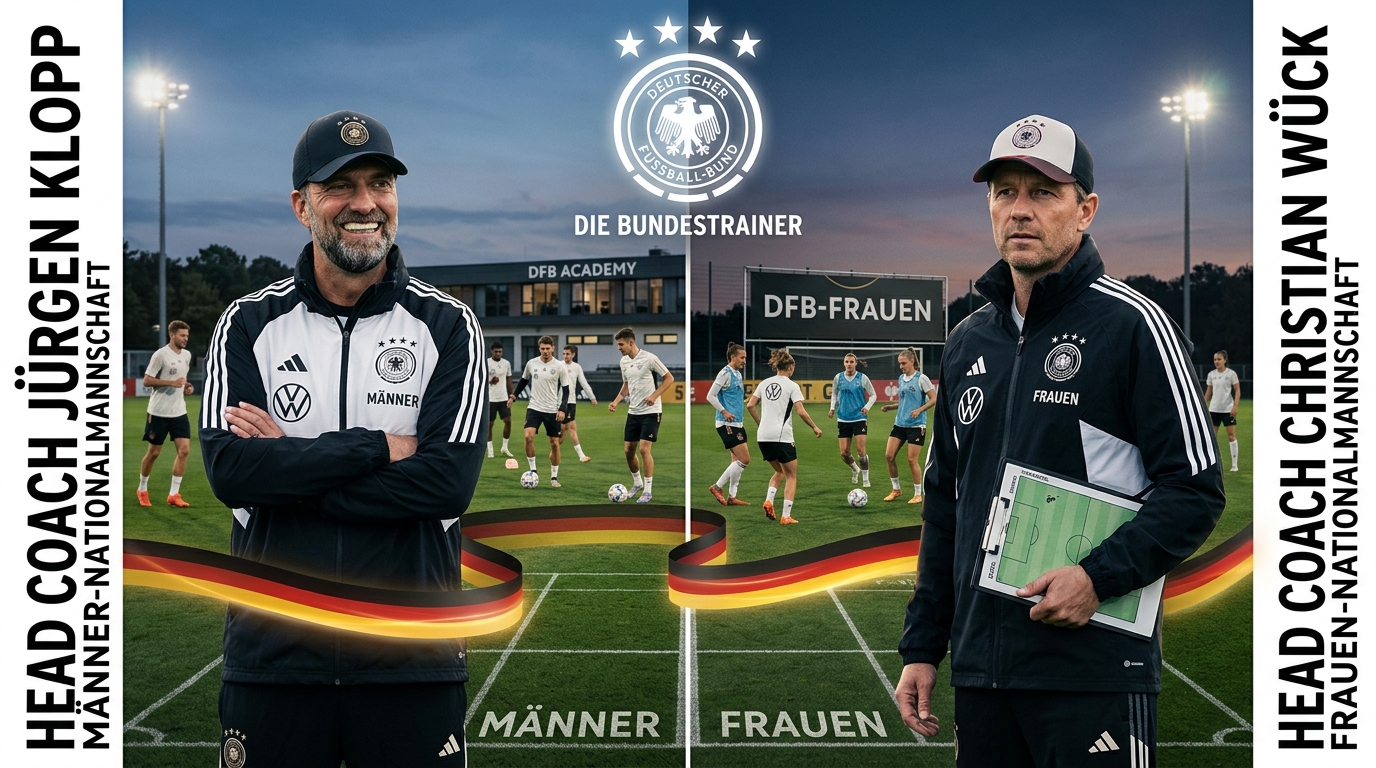
Men: Jürgen Klopp. The DFB appointed Klopp on a contract running through the 2030 World Cup. His staff includes former Liverpool assistants Peter Krawietz and Pep Lijnders, plus former germany national football team international Sven Bender.
Women: Christian Wück. He leads the women’s team and extended his contract with the DFB until 2029, a year that matters because Germany hosts the women’s European Championship then. dfb
Germany squad: the men’s national team
A fair warning about any “German national team roster” you find online: rosters change with every international break, and Klopp has said openly that he wants to look at many players. His preliminary list reportedly ran to 57 outfield players. Treat any fixed list, including this one, as a snapshot. maltafootball
Names that have featured prominently in recent months:
- Joshua Kimmich is the captain and the team’s organizing midfielder.
- Florian Wirtz is the creative focus. He starred in the 2-0 win over Serbia, Klopp’s first victory as coach.
- Jamal Musiala was on the pitch for the Paraguay defeat and remains central to the team’s long-term plans, subject to fitness.
- Nick Woltemade has been a regular striker option since the qualifying campaign.
- Marc-André ter Stegen is the experienced goalkeeper, while Jonas Urbig made his debut in the Serbia game.
- Tom Bischof, Derry Scherhant, and Said El Mala are younger names who were handed chances early under Klopp.
One practical observation: the debut list is more interesting than the star list. When a new coach arrives at a national team, the first squads show his priorities. Klopp’s first selections leaned young and energetic, which matches the high-pressing style he is known for.
How Klopp’s first games went
International coaches rarely get a full preparation period, and Klopp’s opening run showed that. According to a wire report, he drew 1-1 with the Netherlands, lost to Greece, beat Serbia 2-0, and drew 0-0 with Greece in the return game.
That is not a statement result, but the context matters. Klopp used two largely different groups of players across the window, and the second group had only just assembled. It is a small sample, and the November matches against Serbia and the Netherlands will tell us more. Klopp has also said the November squad will be much smaller, around 23 or 24 players.
If you are trying to judge whether the project is working, look at three things rather than the table alone:
- Whether Germany presses as a unit after losing the ball.
- Whether Wirtz and Musiala play in the same lineup and function together.
- Whether the squad stabilizes into a recognizable core by early 2027.
History of the Germany national football team
German football’s international story is told by its great successes, but the more interesting plot line is the number of times they have reinvented themselves.
The early years and the 1954 surprise:
Germany’s first World Cup win was in 1954, when West Germany defeated heavy favorite Hungary 3-2 in the final. It is known in Germany as the “Miracle of Bern” and is seen as a morale boost to a country still recovering from the war.
Home title in 1974:
West Germany won at home in 1974, beating the Netherlands 2-1 in the final. The same players had just won the European Championship in 1972, giving West Germany a period of international dominance.
1990 and reunification:
West germany national football team beat Argentina 1-0 in the 1990 final in Rome, a game decided by a last-minute penalty. It was West Germany’s last World Cup as such, as they were unified shortly afterwards. With the third World Cup title, Germany came into the 1990s, winning the European Championship in 1996.
2014: the most complete team:
The fourth star came in 2014 in Brazil, won with a 7-1 semifinal win over the hosts. The most memorable result was the 1-0 win over Argentina in extra time in the final. That team was the result of a major youth development drive, after a mediocre performance in the 2000 European Championship, and is often given as an example of how to rebuild.
The recent slump:
Group stage exits in 2018 and 2022, a quarterfinal defeat to Spain as hosts in Euro 2024, and a Round of 32 loss in 2026 have defined Germany’s recent performance. Some analysis in Germany suggests that there is tactical rigidity and a lack of identity at the moment. Whatever the cause, it is the context for the Klopp appointment.
Major honours: the men’s team
| Competition | Titles | Years |
| FIFA World Cup | 4 | 1954, 1974, 1990, 2014 |
| UEFA European Championship | 3 | 1972, 1980, 1996 |
| FIFA Confederations Cup | 1 | 2017 |
Germany national football team has also reached many other finals and semifinals, which is part of why it is consistently described as one of the most reliable tournament teams. That reputation is now being tested.
Germany women’s team: the program’s second pillar
Searches for his Germany women’s team have grown as the general rise in the women’s game has grown, and he has the program to back it up.
What the women have won
- Women’s World Cup: 2003 and 2007.
- Women’s European Championship: a record eight, between 1989 and 2013.
- Olympic gold: 2016 in Rio.
Where the team is now
Germany women’s soccer has had a more mixed decade than that list implies. They reached the Euro 2022 final, only to lose to England at Wembley in extra time, and exited the 2023 World Cup in the group stage. Under Wück, the team reached the Euro 2025 semifinal and the Women’s Nations League final, losing out to Spain.
The qualifying campaign for 2027 has been successful. Germany national football team beat Norway 2-0 to become the first European nation to qualify for the 2027 Women’s World Cup in Brazil. The tournament is scheduled to take place from 24 June to 25 July 2027, according to the DFB.
Players to know
- Giulia Gwinn is the captain and a right-back with attacking range. She was named Germany’s women’s Footballer of the Year for 2026, though a shoulder problem kept her out of some recent qualifiers.
- Lea Schüller is the established striker.
- Carlotta Wamser scored in the qualifying win over Norway.
- Linda Dallmann provided both assists in that game.
- Marie Müller scored on her debut in that match.
Women’s squads also move quickly. The DFB publishes each camp’s list in advance.
Pros and cons: what to expect from both teams
Strengths
- A deep player pool across the Bundesliga and top European clubs.
- A federation that moves decisively, as the fast Klopp appointment showed.
- A women’s team that qualified early and has a stable coach.
Concerns
- The men’s team has three straight underwhelming World Cups.
- Limited training time under a coach who built his reputation on daily club work.
- On the women’s side, a gap to Spain that Germany has not yet closed in finals.
Common mistakes when following Germany
- Treating old rosters as current. A list from the World Cup is already out of date.
- Judging Klopp on four matches. The sample is too small, and the squads were split.
- Assuming past titles predict results. Germany’s recent tournaments show that reputation does not win knockout games.
- Ignoring the women’s team until a tournament starts. The qualifiers are where selection battles happen.
The takeaway
The Germany national football team is a curious juxtaposition of old and new. The men’s squad has the honors and a new coach with a clear plan, but they need to match that performance. The women not only have a qualifying and hosting European Championship but also the World Cup ahead. For the most up-to-date player lists, follow the DFB’s official announcements, as they change frequently.
Frequently asked questions(FAQs)
How many World Cups has the Germany men’s team won?
Four: 1954, 1974, 1990, and 2014. The first two and the 1990 title were won as West Germany.
Who is the germany national football team coach in 2026?
Jürgen Klopp coaches the men, and Christian Wück coaches the women.
Has the Germany women’s team qualified for the 2027 World Cup?
Yes. Germany qualified in June 2026 and was the first European team to do so.
Who is the Germany captain?
Joshua Kimmich captains the men’s team, and Giulia Gwinn captains the women’s team, though captaincy can shift when players are injured.